A Week of Turmoil: Unpacking Recent A28 Assen Accidents and Their Enduring Impact
The A28 motorway, a vital artery connecting the northern provinces of the Netherlands, has recently become the site of multiple significant traffic incidents near Assen. These events, collectively forming a challenging period for commuters and logistics, highlight not only the immediate chaos caused by an Ongeval A28 Assen but also the far-reaching consequences on infrastructure, traffic management, and regional life. From multi-vehicle pile-ups to severe truck collisions with critical infrastructure, the past week has seen Drenthe grappling with substantial disruptions, prompting police investigations into their causes and Rijkswaterstaat into long-term road impact assessments.
A String of Disruptions: Detailing Recent A28 Incidents
The recent past has presented the A28 with a series of severe challenges, testing the resilience of both its infrastructure and the motorists who rely upon it daily. Two distinct, yet equally disruptive, incidents have dominated headlines and traffic reports, causing widespread delays and necessitating extensive emergency responses.
The Multi-Vehicle Collision Near Beilen (Tuesday)
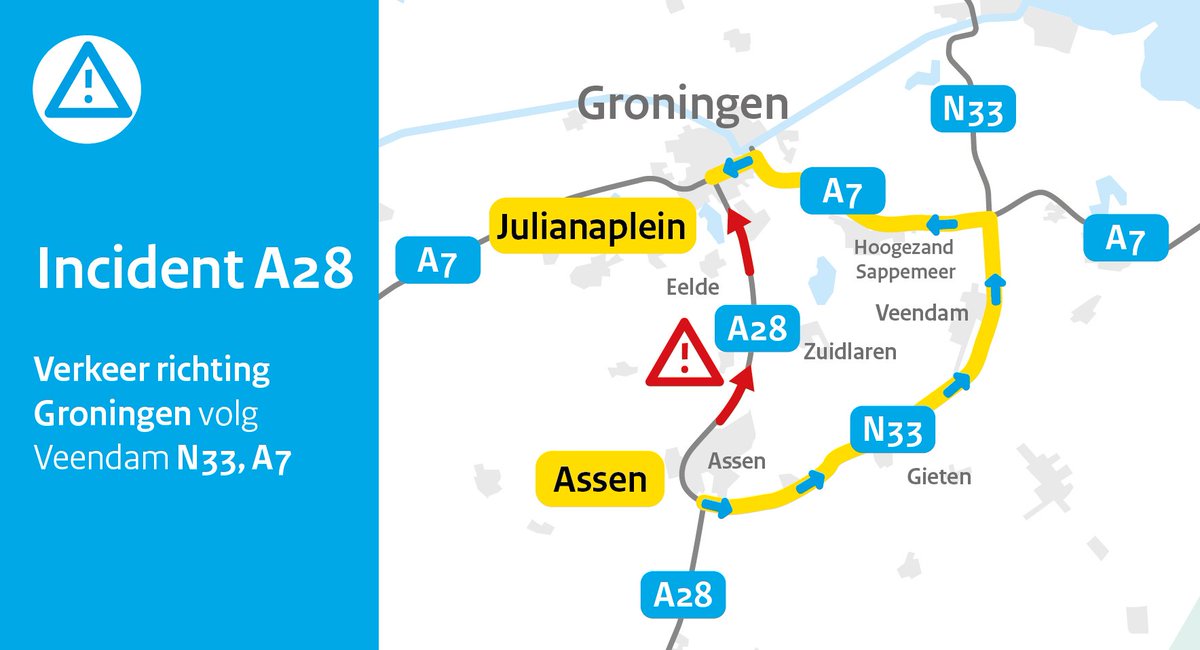
The week of disruption began with a substantial multi-vehicle collision on a Tuesday morning. The A28, specifically the stretch between Beilen and Assen-Zuid, saw six vehicles involved in an accident heading towards Assen/Groningen. While initial reports did not detail the extent of injuries, the sheer number of vehicles involved typically suggests a complex scene requiring significant emergency presence. Rijkswaterstaat, the national agency responsible for road infrastructure, was quick to implement large-scale detours, diverting traffic away from the affected area. Such incidents, often triggered by adverse weather conditions, driver inattention, or sudden braking, can quickly escalate, turning a minor fender-bender into a major pile-up. The resulting road closure, while essential for safety and clear-up operations, immediately choked a critical transport route, forcing thousands of commuters to seek alternative, often congested, paths.
The Severe Viaduct Collision Near De Punt (Wednesday)
Just a day later, the A28 faced an even more dramatic incident, this time near De Punt, between Eelde and Assen. A large truck collided violently with a viaduct, causing significant structural damage and scattering debris across multiple lanes. The impact was so severe that the truck driver became trapped within the wreckage, necessitating a swift and extensive response from emergency services. Firefighters from Eelde and Nieuwe Pekela, equipped with specialized rescue vehicles, worked diligently to free the driver. The Mobile Medical Team (MMT) also arrived on the scene, providing critical medical assistance before the injured driver was rushed to the hospital. Fortunately, initial reports indicated that while the injuries were severe enough to warrant hospitalisation, they were not life-threatening. This particular Ongeval A28 Assen had a profound impact due to the nature of the damage. The A28 towards Assen was completely shut down, specifically between Zuidlaren and Vries, with traffic being rerouted via the N34 and N386. Even the opposing direction towards Groningen saw one lane closed due to scattered debris and ongoing investigations. The critical structural damage to the viaduct meant that the closure extended well into the evening rush hour, causing unprecedented delays. For more specific details on this major incident, you can read our in-depth report: A28 De Punt: Truck Rams Viaduct, Major Delays & Road Closure.
The Far-Reaching Consequences: Beyond Immediate Delays
While the immediate frustration of being stuck in traffic or having to navigate lengthy detours is palpable, the impact of significant road closures like those recently seen on the A28 extends far beyond the individual motorist. These incidents trigger a domino effect, influencing everything from local economies to environmental concerns.
Economic Repercussions and Supply Chain Disruption
The A28 is a lifeline for commercial transport, connecting industrial hubs and distribution centres across the northern Netherlands. Prolonged closures, even for a day, translate into substantial economic losses. Freight transporters face increased fuel costs due to longer detours, delayed deliveries, and missed deadlines, impacting their profitability and potentially driving up consumer prices. Local businesses reliant on timely deliveries for stock or on customers travelling via the A28 can experience significant downturns. Furthermore, the productivity loss from thousands of commuters spending extra hours in traffic adds up, collectively costing the regional economy millions.
Environmental Concerns and Emergency Response Efficiency
The environmental footprint of extensive traffic jams and detours is also a notable concern. Idling vehicles produce higher emissions, contributing to air pollution. Longer routes mean more fuel consumption and increased carbon emissions. These incidents also put emergency services under immense pressure. While their response to the A28 accidents was commendable, the need to rapidly deploy resources, manage complex scenes, and ensure the safety of both victims and responders tests their operational efficiency. The strategic placement of emergency vehicles and the coordination between police, fire, ambulance, and MMT are crucial in mitigating the severity of such events.
Police Investigations and Road Infrastructure Integrity
The prolonged nature of road closures following severe accidents often puzzles the public. However, the reasons behind these extended periods are critical for both immediate safety and long-term prevention.
The Meticulous Work of Accident Reconstruction
Following a serious incident like the A28 viaduct collision, the police launch a thorough and meticulous investigation. This isn't merely about clearing the road; it's about understanding what happened and why. Police forensic teams conduct 'sporenonderzoek' – detailed examination of accident traces and evidence. This involves:
- Documenting the scene with photographs and laser scans.
- Collecting and securing physical evidence, such as vehicle fragments and road markings.
- Interviewing witnesses, including other drivers and emergency personnel.
- Analysing vehicle data recorders (if available) to reconstruct speeds, braking, and steering inputs.
This painstaking process is vital for determining the exact cause of the accident, which can range from mechanical failure to driver error (fatigue, distraction, impairment), or environmental factors. The findings are crucial for potential legal proceedings and, more importantly, for implementing preventative measures to enhance road safety for future travellers. Until this investigative phase is complete and all necessary evidence secured, Rijkswaterstaat cannot commence clear-up operations.
Assessing and Repairing Critical Infrastructure
In cases like the viaduct collision, the involvement of Rijkswaterstaat extends beyond traffic management to critical infrastructure assessment. A viaduct is a complex engineering structure, and a severe impact from a heavy vehicle can compromise its structural integrity. Engineers must conduct detailed inspections to ascertain the extent of the damage, checking for cracks, shifts, or weaknesses that might not be immediately visible. If the damage is significant, temporary supports may be needed, or extensive repair work planned, which can take days, weeks, or even months. Ensuring the safety of the public is paramount; therefore, no road can be reopened until the infrastructure is deemed fully safe and stable. This commitment to safety explains why such closures, though inconvenient, are absolutely necessary.
Navigating the A28: Practical Advice for Commuters and Travelers
While authorities work tirelessly to manage incidents and restore normalcy, motorists also play a crucial role in mitigating the impact of unexpected road closures. Being prepared and informed can make a significant difference to your journey.
Essential Tips for Avoiding Traffic Hotspots
- Plan Ahead: Before setting off, especially for longer journeys or during peak hours, check for traffic updates. Websites and apps dedicated to traffic information are invaluable.
- Consider Alternative Routes: If a major artery like the A28 is closed, explore alternative routes, but be aware that these secondary roads (like the N34 and N386 mentioned for recent detours) will likely also experience significant congestion.
- Adjust Your Schedule: If possible, consider travelling outside of peak rush hours. Even a slight adjustment can help you avoid the worst of the traffic.
- Public Transport: For local commutes, explore public transport options if viable. Buses and trains, though sometimes affected by road closures, can offer a stress-free alternative.
- Stay Patient and Calm: Traffic incidents are frustrating, but aggressive driving only increases the risk of further accidents. Maintain composure and focus on safe driving.
Leveraging Technology for Real-time Updates
In today's digital age, information is your best friend when dealing with traffic disruptions.
- Navigation Apps: Apps like Google Maps, Waze, and TomTom provide real-time traffic updates, suggest alternative routes, and estimate delays. Ensure your app is updated and set to provide traffic information.
- Official Traffic Services: In the Netherlands, the ANWB provides reliable traffic information. Rijkswaterstaat also maintains up-to-date information on its website and through social media channels (e.g., X, formerly Twitter).
- Local News & Radio: Stay tuned to local news channels or radio stations, which often provide immediate updates on major traffic incidents.
Understanding the detours and being prepared for them can significantly ease the stress of unexpected closures. For comprehensive guidance on managing such situations, refer to our article on A28 Assen Closed: Navigating Traffic Chaos & Detours in Drenthe.
Conclusion: A Collective Effort Towards Safer Roads
The recent spate of accidents on the A28 near Assen serves as a stark reminder of the unpredictable nature of road travel and the profound impact a single Ongeval A28 Assen can have. These incidents underscore the critical work performed by emergency services, law enforcement, and infrastructure authorities like Rijkswaterstaat, whose swift and coordinated responses are essential in managing crises and ensuring public safety. While the immediate focus is on clearing the roads and completing investigations, the broader implications—economic disruption, environmental concerns, and the integrity of vital infrastructure—demand continuous attention. For motorists, vigilance, adherence to traffic laws, and leveraging available information technologies are key to navigating these challenges effectively. Ultimately, a collective commitment to responsible driving and robust infrastructure maintenance is crucial for ensuring the A28 remains a safe and efficient thoroughfare for all.